In this guide (16)
- Blue Light District Amsterdam (2026 Guide)
- What is the Blue Light District in Amsterdam?
- Is the Blue Light District real?
- Where is the Blue Light District in Amsterdam?
- Blue Light District map
- Trans sex workers in Amsterdam: the “shemale” windows
- Who works in the Blue Light District?
- How to visit respectfully
- Blue Light District prices
- Best time to visit the Blue Light District
- Is the Blue Light District legal?
- Blue Light District in daylight
- Tours in the Blue Light District
- How this area fits into the wider Red Light District
- What is the purple light in Amsterdam?
- FAQs about the Blue Light District Amsterdam
Blue Light District Amsterdam (2026 Guide)
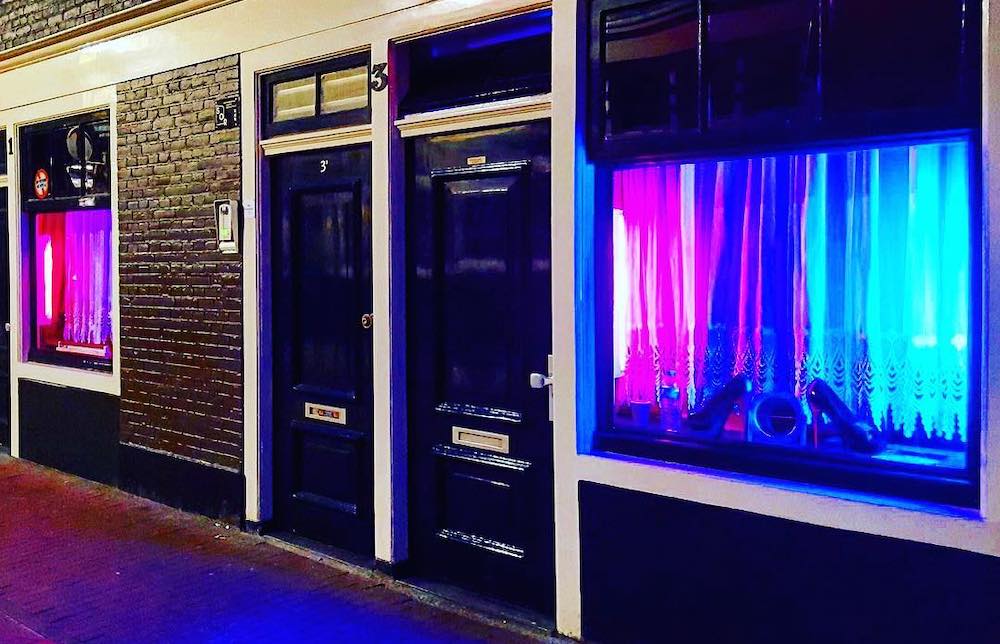
The Blue Light District is not a separate, official district. It is a small part of Amsterdam’s Red Light District (De Wallen), mainly Bloedstraat and Gordijnensteeg, just off Oudezijds Achterburgwal, where a few window brothels glow blue instead of red. The blue light has historically signalled that the sex worker behind that window is transgender.
Last updated: November 2026
Most useful next steps: map · rules & laws · audio tour
| What it is | The part of De Wallen where some window brothels light up blue instead of red |
| Streets | Bloedstraat and Gordijnensteeg, just off Oudezijds Achterburgwal |
| The blue light | Traditionally signals transgender window workers (red is used across the rest of De Wallen) |
| Prices | Broadly the same as the rest of the Red Light District (see prices below) |
| Best time | After dark, once the windows are lit |
| Photos | Not allowed: never photograph the workers or the windows |
⭐ Our #1 pick: chat and match with local singles tonight
Join free at Meet-n-Hook »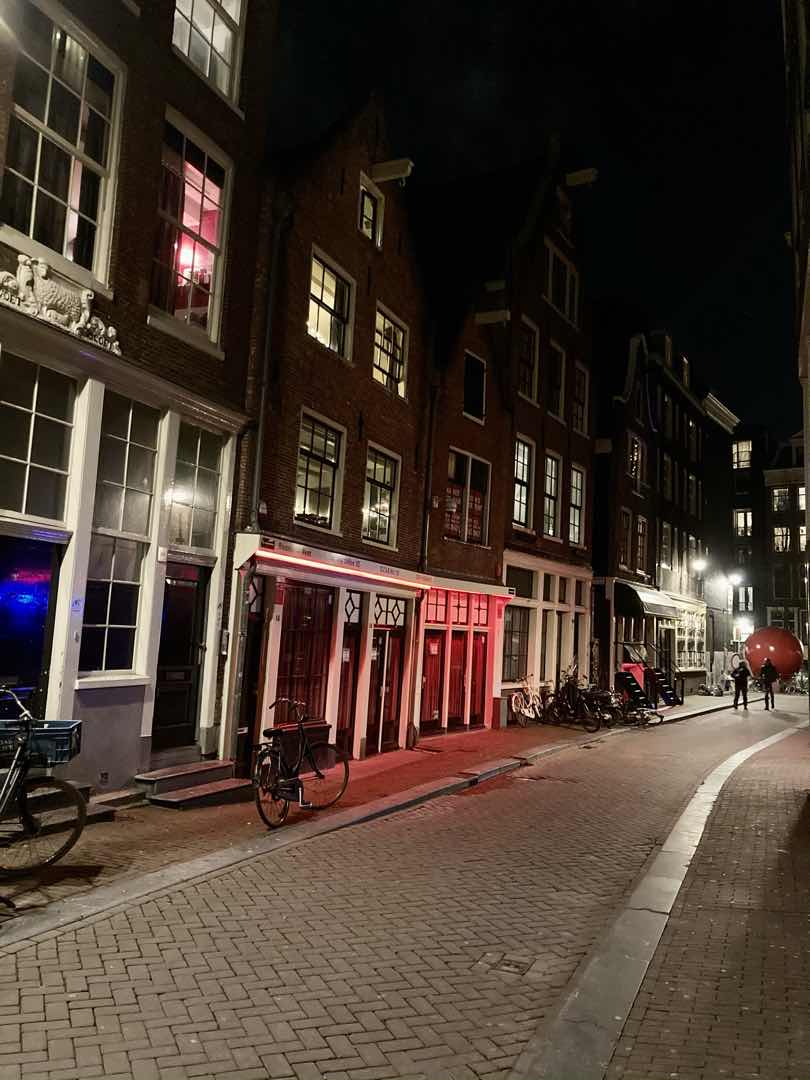
Explore the Red Light District at your own pace
Skip the tour group and wander whenever you like. The self-guided audio tour gives you a GPS route and 22 expert stories on your phone.
What is the Blue Light District in Amsterdam?
The term Blue Light District is a visitor nickname for a small part of Amsterdam’s wider Red Light District where some window brothels use blue lighting. It is mainly used to describe windows associated with transgender sex workers, although the lighting itself is not an official legal category.
That point matters. Many tourists imagine a fully separate district with its own borders, but that is not really how it works. In practice, the Blue Light District Amsterdam is part of the broader De Wallen area and blends into the same old-city streets, canals, and nightlife routes that visitors already know from the Red Light District.
Simple definition: the Blue Light District = a small cluster of blue-lit windows inside De Wallen, not a separate neighborhood on the city map.
Is the Blue Light District real?
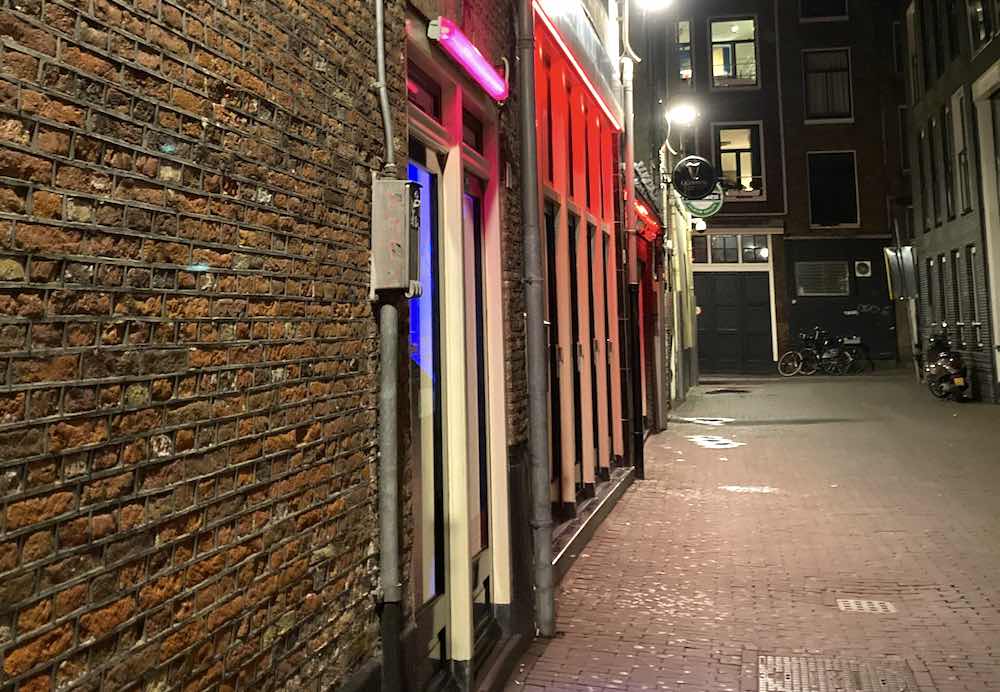
Yes, the blue windows are real, but “Blue Light District” is a visitor nickname rather than an official district. The blue lighting has long been linked to transgender window workers in a couple of De Wallen streets. There is no separate legal zone or boundary. It is part of the same regulated window-prostitution area, under exactly the same rules as the red-lit windows.
Another thing that causes confusion is that not every transgender window worker uses blue lighting, and not every blue-lit window is active at the same time. Some windows may be closed, some streets may show both red and blue lights, and the atmosphere can change depending on the hour.
That is why visitors should think of it as a known sub-area or local nickname, not as a fully separate red-light zone with its own official boundary signs.
If the Blue Light District has made you curious about Amsterdam’s broader adult scene, it can also be useful to compare the online side of dating in the Netherlands. Our guide to the best gay sex date sites in Holland helps readers explore which platforms are best for fast matches, more discreet contact, and gay dating options beyond the better-known streets and venues of Amsterdam.
See a real live sex show in Amsterdam
The Red Light District’s best-known erotic theatre, right on the Wallen. Book skip-the-line tickets from €50 and walk straight in.
Where is the Blue Light District in Amsterdam?
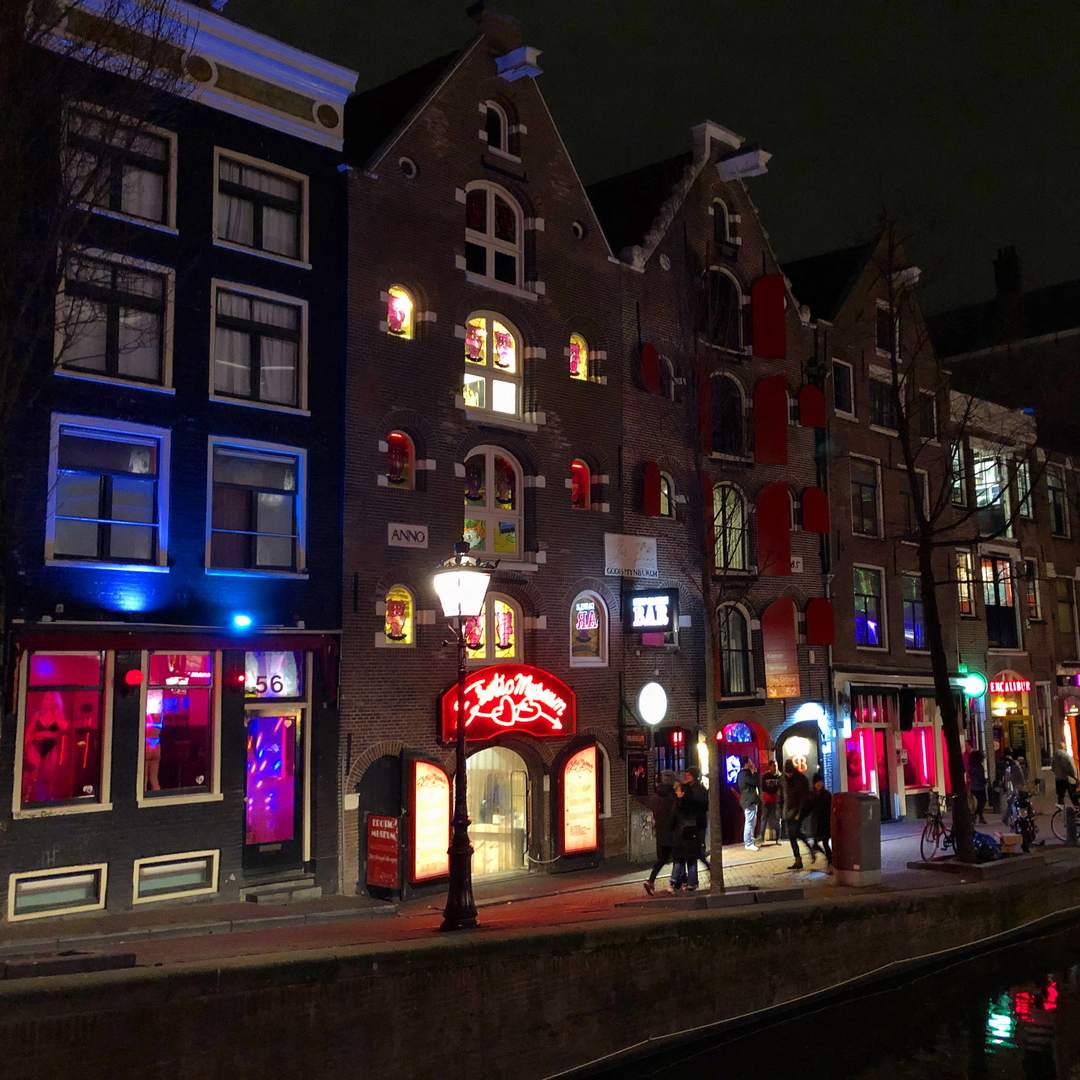
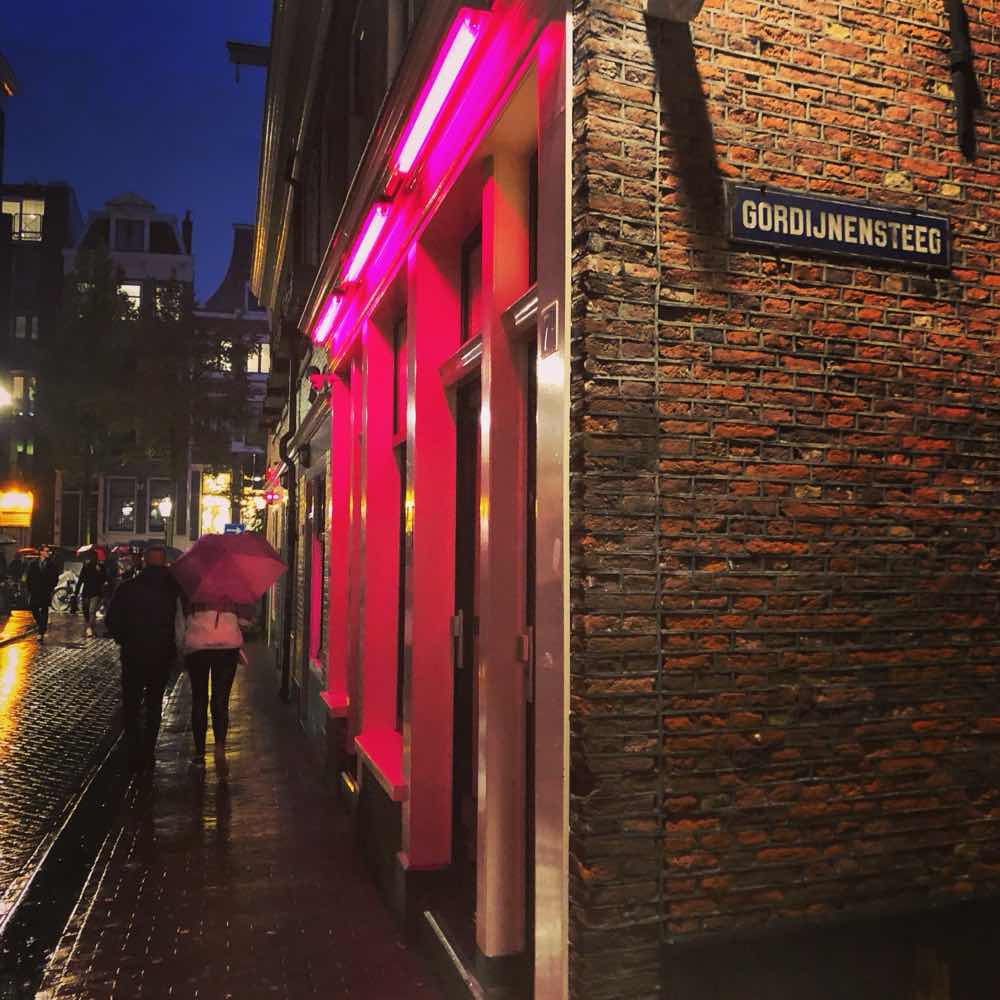
The Blue Light District Amsterdam is usually associated with Bloedstraat and Gordijnensteeg, two small streets just off Oudezijds Achterburgwal. This is one of the busiest and best-known streets in De Wallen.
Because the area is small, many people walk through it without realizing what they are seeing. The easiest way to find it is to navigate toward Oudezijds Achterburgwal first, then look at the nearby side streets rather than searching for a big separate zone.
- Main reference street: Oudezijds Achterburgwal
- Most-mentioned side streets: Bloedstraat and Gordijnensteeg
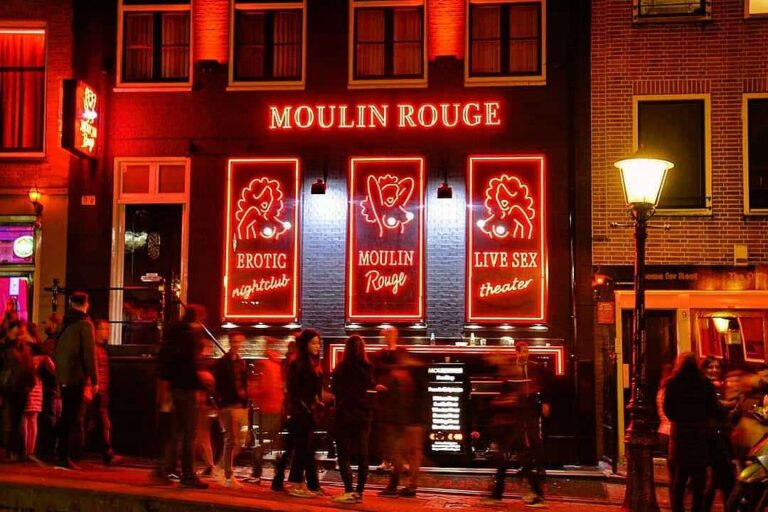
- Nearby landmark: Moulin Rouge
Use our interactive map if you want to understand the layout before you go.
Blue Light District map
The Blue Light District centres on Bloedstraat, a short street in the heart of De Wallen. Here are the two easiest walking routes to it: from Dam Square (red, ~7 min) and from Amsterdam Centraal (blue, ~11 min).
🔴 From Dam Square
Open walking route in Google Maps ↗🔵 From Amsterdam Centraal
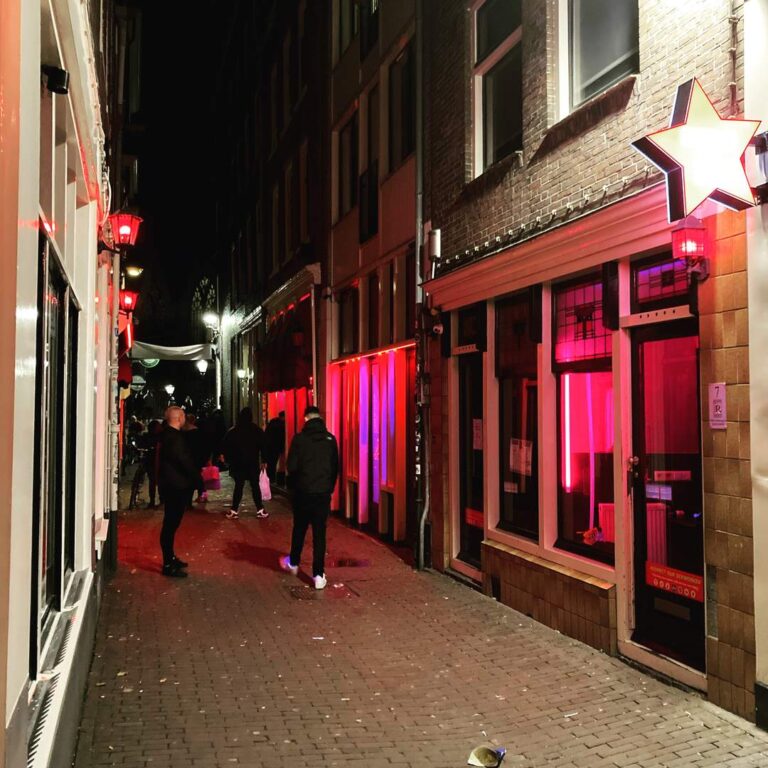
Open walking route in Google Maps ↗The blue-lit windows are on Bloedstraat and Gordijnensteeg, just off the Oudezijds Achterburgwal canal. The whole area is car-free, so you always arrive on foot.
Want more than directions? Pair this route with our Red Light District Tour (GPS audio guide). It helps you understand what you are seeing, why the area matters, and how to behave respectfully while walking through it.
Trans sex workers in Amsterdam: the “shemale” windows
Trans sex workers in Amsterdam work mainly behind the blue-lit windows on Bloedstraat and Gordijnensteeg. Visitors often search for “shemale Amsterdam” or “ladyboy Amsterdam”, but most trans women find those words offensive. At the door, say “trans woman” or just ask your question politely.
We know of no separate trans brothel or trans club in De Wallen. Each blue window is a small room rented by an independent sex worker, the same as a red window. You agree on the service, the time and the price at the door, and she may refuse any client.
- Where: Bloedstraat and Gordijnensteeg, off Oudezijds Achterburgwal.
- How to recognise it: a blue light above or inside the window instead of red.
- Price: usually about €100 for a short visit in 2026, sometimes from €50 at quiet hours. See the Red Light District menu for what that includes.
- Not every worker here is trans: ask if you are not sure, and accept a no.
Who works in the Blue Light District?
The Blue Light District is generally linked to transgender window sex workers. That is the main reason the term became known among tourists and online travel guides.
At the same time, visitors should avoid thinking in rigid categories. Streets in De Wallen can change over time, windows can switch lighting, and different workers may use the same area. That makes it more accurate to say that this area is associated with transgender window sex work rather than claiming every single window there follows one fixed pattern.
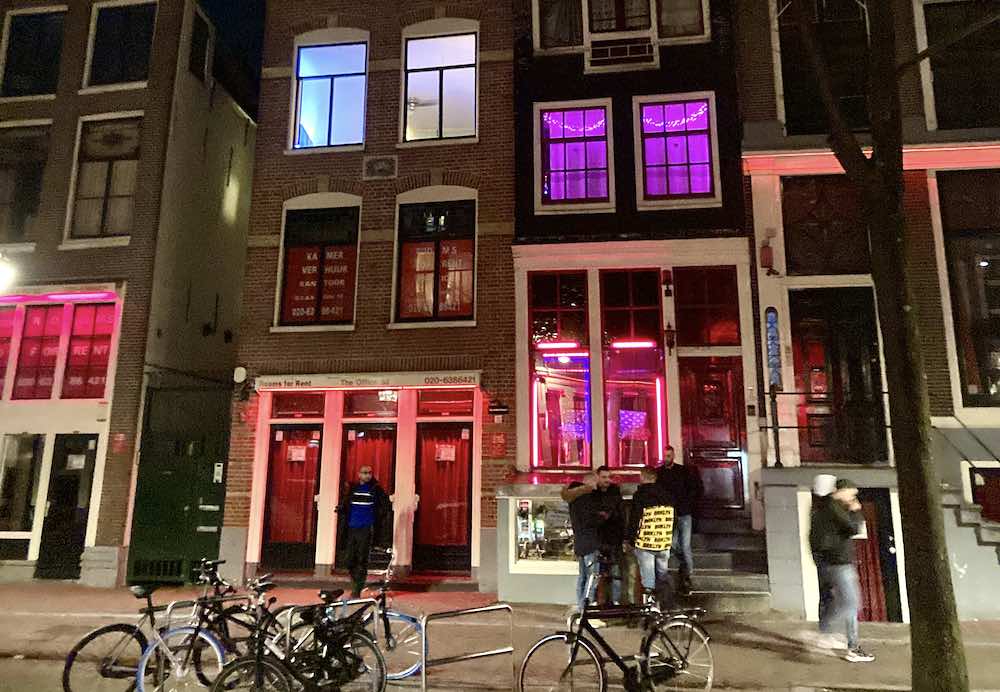
Window brothels on the Oudezijds Achterburgwal.
For visitors, the most important point is not the label, but the behavior: these are workers in a real workplace, inside a real neighborhood, and they should be treated with the same respect as anyone else in De Wallen.
The blue-lit windows are concentrated on two narrow streets, Bloedstraat and Gordijnensteeg, just off the Oudezijds Achterburgwal. Bloedstraat in particular is known as the street for transgender sex workers. An academic paper from Birmingham City University estimates that around 15% of the sex workers in the Red Light District are transgender; that is an estimate, not a count. One of the window operators in De Wallen is Red Light Office Boomsteeg, which says it rents 31 windows to independent, self-employed sex workers. Its owner and director, Pim van Burk, is also an Amsterdam city councillor for the Volt party, according to the City of Amsterdam council register (checked November 2026).
How to visit respectfully

Respect matters even more in smaller side streets because they are narrow, easy to block, and often quieter than the main canal roads. Workers in blue-lit windows are also known to be especially protective of privacy, and for good reason.
The fastest way to create trouble is to treat the area like a spectacle. A calm, quiet walk is fine. Taking photos, pointing, shouting, staring, or turning the street into a joke is not.
- Do not take photos or videos of workers or occupied windows
- Keep doorways, alleys, and bridges clear
- Lower your voice late at night because residents live here
- If you are unsure, keep walking and observe quietly
For the full visitor rules, read our rules & laws and etiquette guides.
Prices outside the Blue Light District, from windows to escorts: what a whore costs in the Netherlands.
Blue Light District prices
Prices in the Blue Light District are broadly similar to other window areas in De Wallen. There is no official printed menu for the entire area, and rates can vary by worker, timing, and what is agreed.
A short visit usually costs about €100 in 2026, sometimes from €50 at quiet hours, but treat that as an indication, not a fixed rate. Like elsewhere in the Red Light District, prices can change and workers can always refuse customers.
The Red Light District menu explains what the price includes and what costs extra. For shows, drinks and a full night’s budget, read our main guide on Amsterdam Red Light District prices.
Best time to visit the Blue Light District
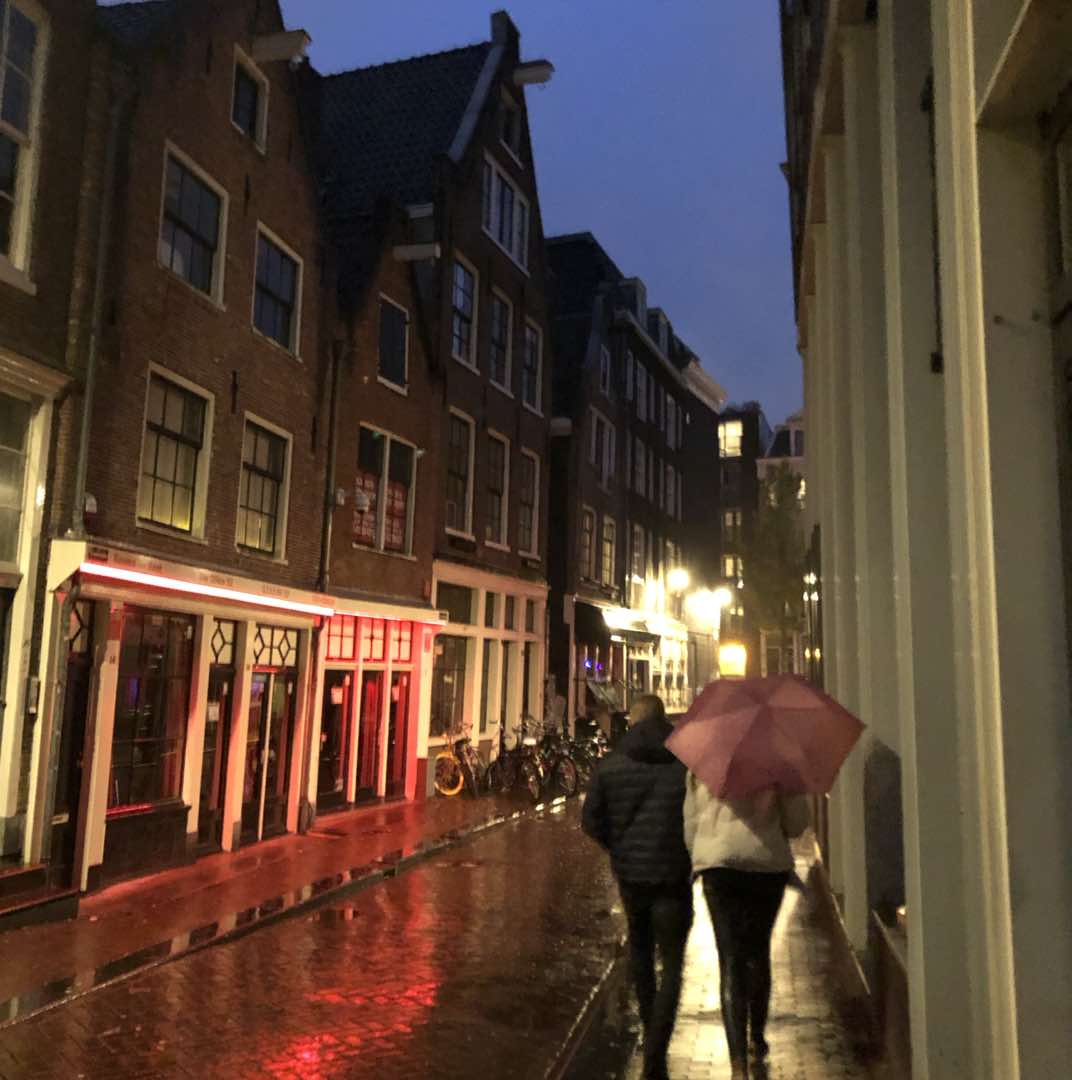
The area can be visited any day, but the experience changes a lot between daytime and evening. During the day, the side streets feel quieter and more residential. At night, the atmosphere becomes more recognizable and the blue lighting is easier to spot.
For most visitors, the best moment is early evening to late evening. That is when the area feels active, but before the very late-night crowds become too heavy.
Best timing
- Morning / daytime: quieter, easier to orient yourself, fewer active windows
- Evening: more atmosphere, more visible blue lights, livelier streets
- Best for first-timers: around 8 PM to 10 PM
Tip: use the Red Light District map before walking there in low light.
Is the Blue Light District legal?
Yes. Blue-lit windows are legal when they are part of Amsterdam’s regulated window sex work system. The same broad city framework applies here as in other licensed parts of De Wallen.
The visitor basics are simple: window sex work in Amsterdam operates under municipal rules, licensed venues, and local enforcement. That does not mean tourists can do whatever they want. Privacy, nuisance rules, and respectful behavior still apply.
- licensed venues are legal
- workers set boundaries and can refuse anyone
- privacy rules matter just as much here as elsewhere in De Wallen
If you want the full legal explanation, go to our Amsterdam Red Light District laws page.
Blue Light District in daylight
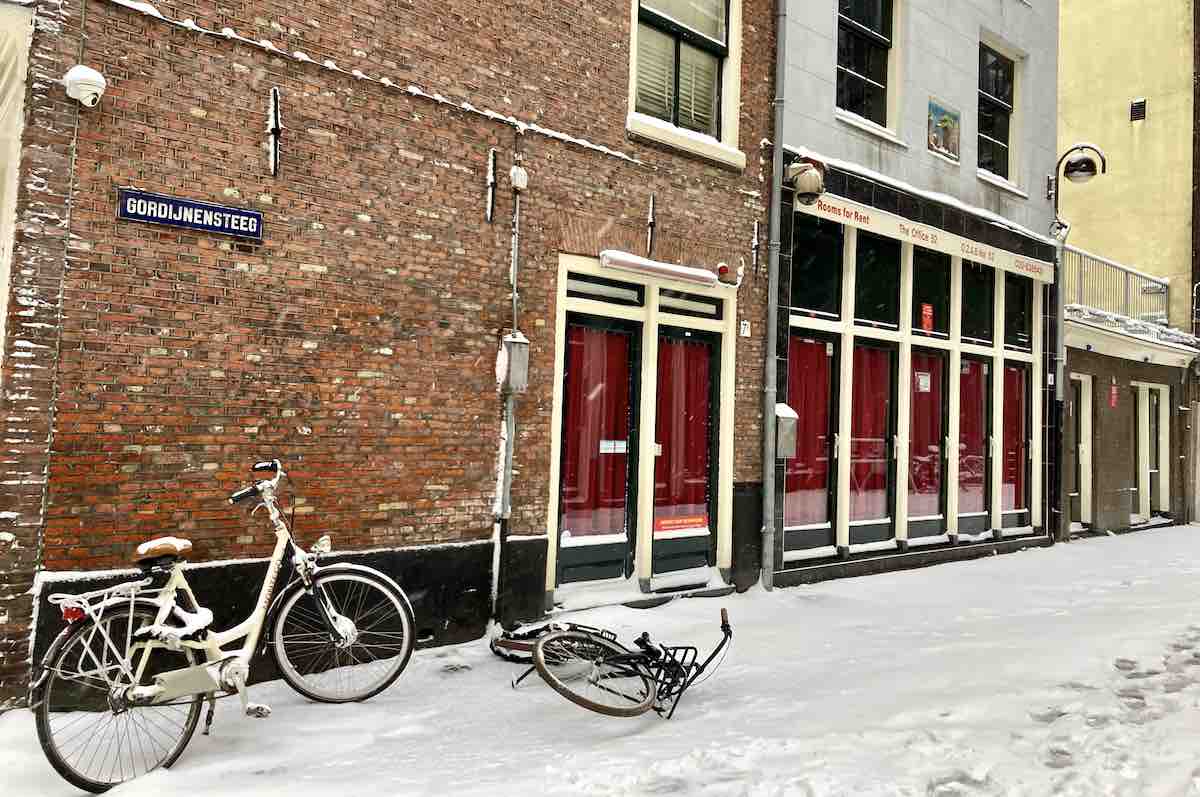
In daylight, the Blue Light District looks much more like a normal part of Amsterdam’s old centre. The small streets, brick buildings, and canal-side layout stand out more than the nightlife identity.
That contrast is one reason many visitors find the area interesting. By day it feels like a quiet historic side street. By night it becomes part of the wider Red Light District atmosphere. Seeing both versions helps you understand De Wallen better.
Tours in the Blue Light District
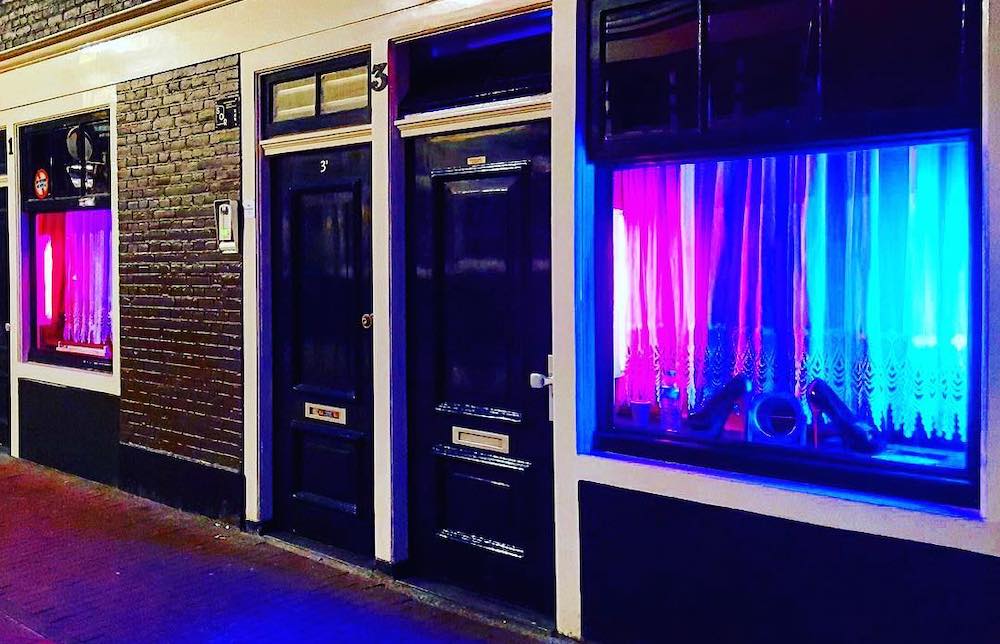
If you want context, stories, and practical guidance, the best legal way to explore this area is with a self-guided audio format. Guided tours past the windows have been banned since 1 April 2020, so an audio tour is the way to hear the stories behind this street.
Our Red Light District audio tour helps you understand how the area fits into De Wallen as a whole. It gives you route guidance, local context, and a more respectful way to walk through a sensitive neighborhood.
GET TOUR >How this area fits into the wider Red Light District
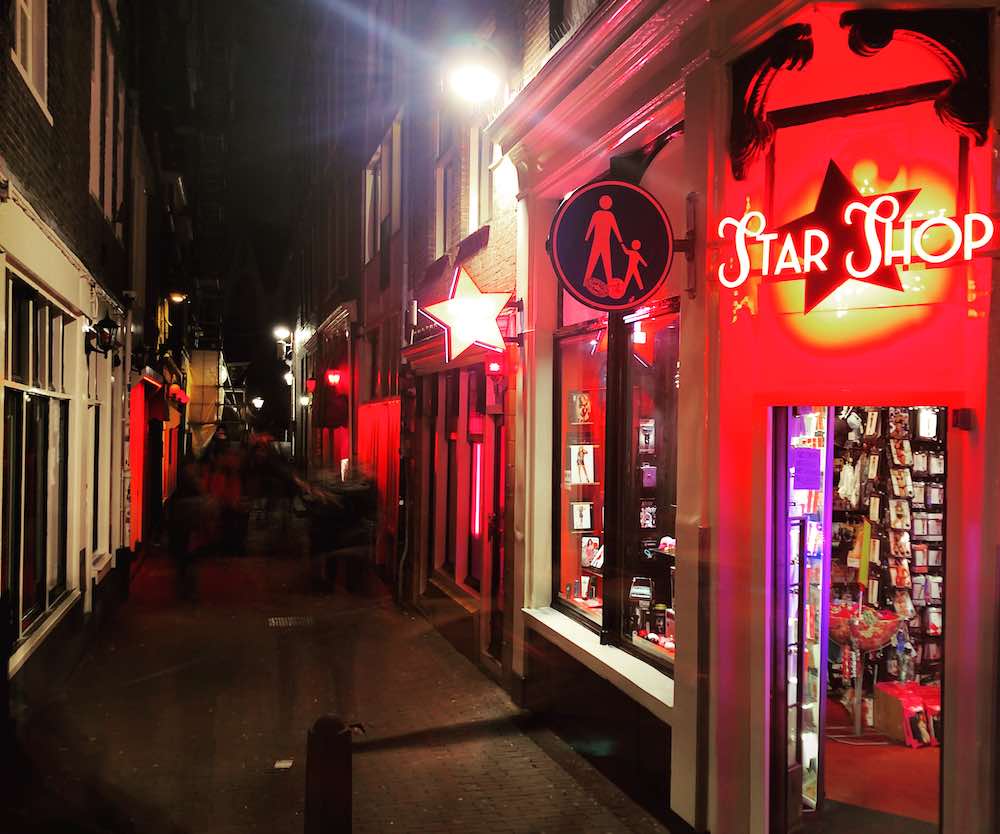
The Blue Light District makes the most sense when you see it as one part of a larger system: De Wallen is not one single street, but a network of canals, alleys, nightlife venues, homes, and window areas with slightly different identities.
These guides give the bigger picture:
- What is the Red Light District in Amsterdam?
- What is De Wallen?
- Red Light District etiquette
- Luxury hotels in Amsterdam
What is the purple light in Amsterdam?
Some visitors ask about a “purple light district” in Amsterdam. There is no separate purple zone. What people usually see is a blue window that photographs as purple or violet, or blue and red light mixing in the same alley. In practice, purple light and blue light mean the same thing here: the blue-lit windows in De Wallen traditionally linked to transgender sex workers, as opposed to the red windows used by cisgender women.
Looking beyond the windows? Compare Amsterdam brothels and private houses or book an erotic massage in Amsterdam.
FAQs about the Blue Light District Amsterdam
What is the Blue Light District in Amsterdam?
The Blue Light District in Amsterdam is a visitor nickname for the blue-lit windows on Bloedstraat and Gordijnensteeg in De Wallen. The blue light traditionally signals that the sex worker behind the window is transgender.
Is there a Blue Light District in Amsterdam?
Yes, there is a Blue Light District in Amsterdam, but it is not an official district. It is two short streets inside the Red Light District where some windows are lit blue instead of red.
Where is the Blue Light District in Amsterdam?
The Blue Light District is on Bloedstraat and Gordijnensteeg, two side streets off Oudezijds Achterburgwal in De Wallen. It is about a 7-minute walk from Dam Square.
How far is the Blue Light District from Central Station?
The Blue Light District is about an 11-minute walk south of Amsterdam Central Station. The area is car-free, so you arrive on foot.
What does the blue light mean in Amsterdam?
The blue light in Amsterdam means that the sex worker behind that window is usually a trans woman. Red windows are used by cisgender women.
Are there trans sex workers in Amsterdam’s Red Light District?
Yes, there are trans sex workers in Amsterdam’s Red Light District, mainly behind the blue-lit windows on Bloedstraat and Gordijnensteeg.
Is there a shemale or trans brothel in Amsterdam?
We know of no separate shemale or trans brothel in Amsterdam’s Red Light District. Trans sex workers rent individual window rooms, mostly on Bloedstraat. “Shemale” is a search term that most trans women find offensive.
How much do you pay in the Blue Light District?
In the Blue Light District you usually pay about €100 for a short window visit in 2026, sometimes from €50 at quiet hours. Agree on the price and the service with the worker before you start.
Can you take photos in the Blue Light District?
No, you cannot take photos or videos of the workers or the windows in the Blue Light District. Privacy is the most important rule in these streets.
Is the Blue Light District safe to visit?
The Blue Light District is generally safe to visit. Keep your belongings secure, do not block the narrow alleys and behave respectfully.
What is the best time to visit the Blue Light District?
The best time to visit the Blue Light District is early evening, around 8 PM to 10 PM. The blue lights are on and the streets are not yet at their busiest.
What is the purple light in Amsterdam?
The purple light in Amsterdam is the same as the blue light. A blue window often photographs as purple, and there is no separate purple district.
When did the blue-light system start?
The blue-light system has no official start date. It grew as an informal convention in De Wallen to mark transgender windows, not from a city rule.
ALSO DISCOVER:
Amsterdam Red Light District Prices
Looking for a date? Read our guide: the 9 best sex-dating sites in the Netherlands.
 EN
 DE
 FR
 NL
 ES
 ZH